



Lab grown Diamonds vs Natural Diamonds: The Complete Guide for Engagement Ring Shopping
Choosing between lab grown vs natural diamond engagement rings is often one of the first big decisions you’ll make on the journey to your perfect proposal. It’s completely natural to wonder, “lab grown or natural diamond – which is better?” But in reality, the best choice is simply the one that matters most to you as a couple.
To help you decide, we’ve created a clear natural diamonds vs lab diamonds comparison that looks beyond the basics. We’ll explore the unique appeal of natural diamonds, including the romance of a gemstone formed billions of years ago, alongside the advantages of lab grown diamonds, which offer exceptional value and help you get the most out of your budget.
We’ll also take a closer look at exactly how lab grown diamonds are made, explaining why these stones are chemically and visually identical to diamonds formed within the earth.
By the end of this guide, you’ll have a clear understanding of the difference between lab grown and natural diamonds, helping you confidently choose the perfect stone to represent your unique love story.
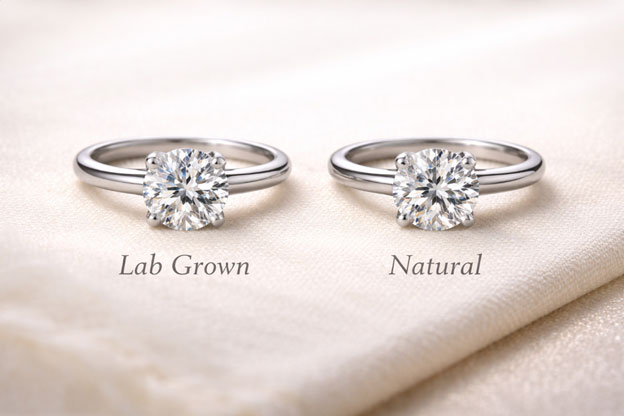
Natural Diamonds vs Lab Diamonds Comparison: A Side-by-Side Guide
| Feature | Natural Diamonds | Lab Grown Diamonds |
| Visual Appearance | Breathtaking fire and brilliance. | Identical. Indistinguishable to the naked eye. |
| Budget and Size | Premium price for rarity, smaller carat for budget. | Exceptional value. A larger stone for the same price. |
| Daily Durability | 10/10 hardness. Won’t scratch or cloud — perfect for a lifetime. | 10/10 hardness. Identical strength and lifespan as natural. |
| The Story | A billion-year-old miracle of nature and deep history. | A modern masterpiece of human innovation and science. |
| Ethical Profile | Ethically sourced via the Kimberley Process. | 100% conflict-free. Fully traceable and modern. |
| Resale Value | Retains a higher percentage of original value over time. | Lower resale value — value is in the initial savings. |
| Quality Grading | Certified by GIA or IGI. | Certified by GIA or IGI. |
What Are Natural Diamonds?
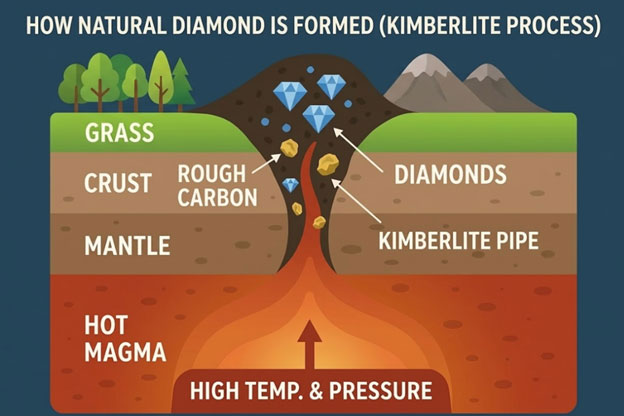
Natural diamonds are some of the most extraordinary gemstones on the planet. Their story begins deep below the Earth’s surface and spans billions of years.
Formed Deep Within the Earth
Natural diamonds form in the Earth’s mantle around 150-200km below the surface. (Some extremely rare diamonds form as deep as 800km below the surface!) In this environment, intense heat and pressure transform carbon atoms into the crystal structures we recognise as diamonds.
This process takes a remarkably long time — over one billion years. The result is one of the hardest and most brilliant materials found anywhere in nature.
Brought to the Surface by Volcanic Activity
Diamonds are usually stuck deep inside the Earth. They only reach the surface thanks to rare, high-speed volcanic eruptions that shoot them up through narrow pipes called kimberlites.
These pipes act as geological express lifts. Because the eruptions happen so fast, the diamonds don't have time to turn into graphite before they cool down at the surface. These cooled-down pipes are where we eventually find natural diamonds.
A Unique Geological Journey
Because natural diamonds are formed under such unique geological conditions, every stone has its own story. Each diamond represents a tiny fragment of the planet’s ancient history — a gemstone that formed long before humans ever existed. For many people, this incredible journey adds an extra layer of meaning.
How Lab Grown Diamonds Are Made: The Science of Sparkle
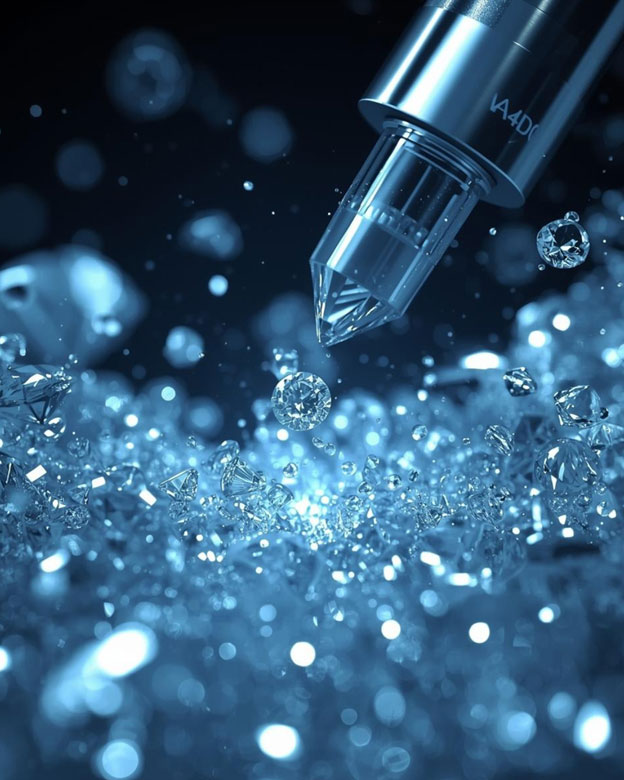
Lab grown diamonds offer the same beauty and brilliance as natural diamonds, but they’re created using modern technology, instead of ancient geological processes.
Created Using Advanced Technology
Lab grown diamonds are produced in carefully controlled lab environments that replicate the conditions under which natural diamonds form. These special environments allow scientists to create genuine diamonds by encouraging carbon atoms to crystallise in the same structure found in natural stones.
The result is a diamond with exactly the same physical, chemical, and optical properties.
Two Main Creation Methods
There are two main ways to grow diamonds in labs:
HPHT (High Pressure High Temperature)
The HPHT method recreates the intense pressure and heat found deep within the Earth. Carbon is exposed to these extreme conditions until it crystallises into a diamond.
CVD (Chemical Vapour Deposition)
In the CVD method, a tiny diamond seed is placed inside a special chamber filled with carbon-rich gas. The carbon atoms gradually bond to the diamond seed, developing a diamond crystal layer by layer.
Both techniques produce real diamonds that can be cut, polished, and graded, just like natural stones.
Real Diamonds in Every Way
One of the most common questions people ask us is: are lab grown diamonds real diamonds?
The answer is simple: yes, they are.
Lab grown diamonds have the same chemical composition (crystallised carbon) and the same optical brilliance as natural diamonds. Even trained gemologists have to use special equipment to tell the difference. When you look at them with the naked eye, both kinds of diamonds look identical.
Think of it like ice. A natural diamond is like ice from a glacier, while a lab grown diamond is like ice from your freezer. They have different origins, but they are both H2O. One isn't more real than the other — they’re simply made in different environments.
The Similarities Between Lab Grown and Natural Diamonds
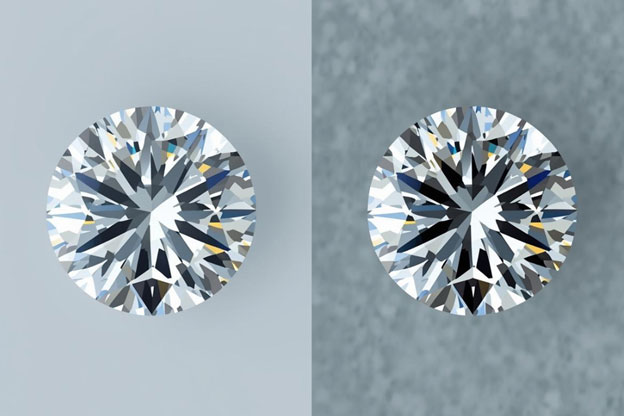
If you placed a lab grown diamond and a natural diamond side-by-side, you (and even most jewellers) wouldn’t be able to tell them apart. That’s because, despite their different origins, they share the exact same DNA.
Identical Chemistry
Both stones are 100% crystallized carbon. A lab grown diamond isn’t a lookalike — it’s the real thing. It’s this specific atomic arrangement that creates the legendary fire and light-bending properties that make a diamond a diamond.
Same Hardness and Durability
An engagement ring needs to keep up with your life. Both lab and natural diamonds rank a 10 on the Mohs hardness scale, making them the hardest substance on Earth. Whether your diamond came from the mantle or a machine, it won't scratch, cloud, or degrade over time.
Same Sparkle and Brilliance
Because they share the same physical structure, they interact with light in the exact same way. This means they are both evaluated by the same industry standards you’ve likely heard of: the 4 Cs.
- Cut: How well the stone is shaped to reflect light.
- Colour: How white or colourless the diamond appears.
- Clarity: The absence of tiny internal inclusions.
- Carat Weight: The size and presence of the stone.
- The Lab grown Advantage: You can often buy a lab grown diamond that’s significantly larger or of a higher clarity for the same price as a smaller natural stone. It’s the best way to get the most sparkle without going over budget.
- The Natural Advantage: Although the initial cost is higher, natural diamonds are a finite resource. Because there will only ever be so many of them, they generally retain their resale and appraisal value more consistently, making them a better investment piece.
- Eternal Strength: Both stones sit at a 10 on the Mohs scale, making them the hardest substance on Earth. This means your diamond will never scratch, cloud, or fade. It’s a true heirloom piece designed to withstand a lifetime of daily wear and be passed down through generations.
- Captivating Brilliance: Because they share the same exact physical structure, both stones interact with light in the same way. They possess the same high refractive index, giving you that signature fire and sparkle that makes a diamond dance when it catches the light.
- An Identical Identity: It’s a common myth that lab grown diamonds are simulants, like cubic zirconia or moissanite. They’re not. Both lab grown and natural diamonds are 100% crystalised carbon. They’re identical when it comes to physical, chemical and optical properties.
- The Natural Route: A £2,000 budget might secure a high-quality 1ct natural diamond. It’s a classic, beautiful choice with the prestige of rarity.
- The Lab Grown Upgrade: That same £2,000 budget could often secure a 5ct lab grown diamond with the same or even better colour and clarity.
Lab Grown Diamond Benefits
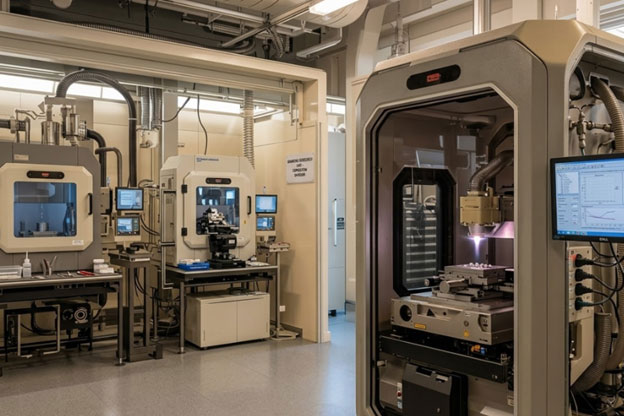
When it comes to choosing a diamond, you aren't just picking a piece of jewellery — you’re choosing a story. Whether that story was written billions of years ago in the crushing heat of the Earth’s mantle or crafted through the peak of human ingenuity in a lab, the result is a breathtaking gemstone that is chemically, physically, and optically identical.
Excellent Value
The most immediate benefit of lab grown diamonds is the price point. Because the supply chain is shorter and more predictable, lab grown diamonds cost less than their natural counterparts. This gives you the freedom to maximise your budget. For example, you could choose for a 2ct stone with flawless clarity instead of a 1ct with visible inclusions for the same price.
Modern Innovation
Using processes like HPHT and CVD, scientists mimic the extreme conditions of the Earth. These stones aren't fakes — they’re real diamonds grown from a tiny diamond seed. It is a feat of human achievement that allows for the creation of high-quality gems without the environmental footprint of large-scale mining.
Expanding Choice
You could argue that the biggest benefit of lab grown diamonds is simply having more options. When shopping for a diamond engagement ring, being able to choose between both natural and lab grown diamonds gives you the opportunity to pick the stone that best suits your love story.
Natural Diamond Benefits
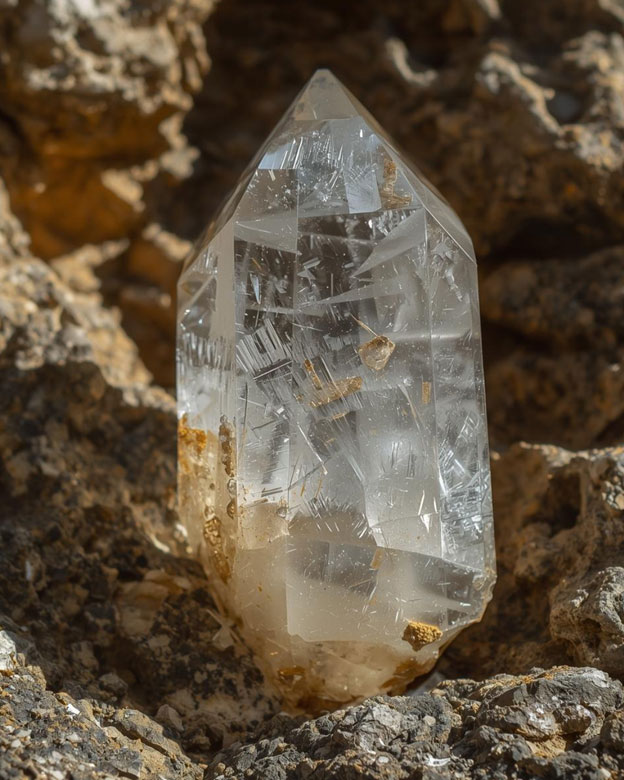
Natural diamonds are more than simple gemstones — they’re geological time capsules. For many people, the appeal lies in the fact that these stones are a finite resource from a world long before humans existed.
Extraordinary Natural Origins
Most natural diamonds are between 1 and 3.5 billion years old. They survived a violent journey from 200 kilometers below the surface through volcanic pipes to reach your hand. Owning a natural diamond means wearing a piece of the Earth's ancient history.
Unique Geological History
Every natural diamond has its own story. No two diamonds are ever formed in exactly the same way, which is what gives each stone its own distinct characteristics. This individuality is part of what makes natural diamonds so fascinating.
Unlike lab grown stones, which can be produced in unlimited quantities, the Earth isn't making any more natural diamonds. This scarcity often helps natural diamonds retain their resale and appraisal value, making them a true investment piece.
Timeless Appeal
Natural diamonds have long been cherished as symbols of love, commitment, and celebration. They’ve been used in engagement rings for generations, making them a timeless choice for marking life’s most meaningful moments.
How to Choose Between Lab Grown and Natural Diamonds
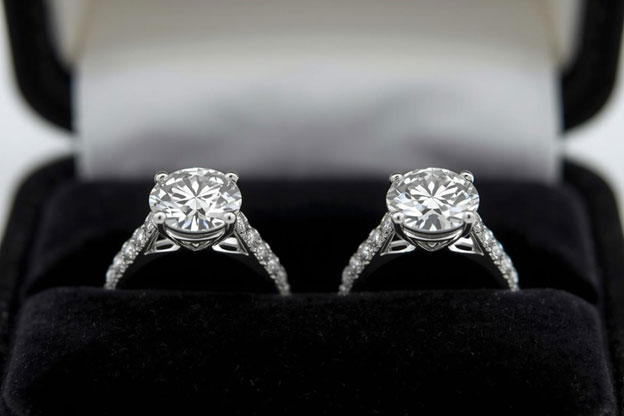
Consider Your Priorities
When asking, “lab grown or natural diamond which is better?”, the answer usually depends on whether you value ancient history or modern science. If you’re a fan of state-of-the-art innovation and high-tech artistry, a lab grown diamond is a stunning testament to what science can achieve.
But if you’re a traditionalist who finds romance in the rare and ancient, the allure of a natural diamond that existed long before the first humans might be the only choice that feels right.
Budget and Size Preferences
For many people, the decision comes down to price. Because lab grown diamonds can be made in a much shorter timeframe, they’re cheaper than their natural counterparts.
Personal Meaning
Every diamond carries a unique message. A natural diamond is a geological time capsule, forged 200km underground billions of years ago. Wearing a piece of Earth’s ancient history can add a layer of forever to a diamond that a lab simply cannot replicate.
On the other hand, a lab grown diamond represents a conscious choice in modern times. It offers a transparent, conflict-free history and a lower environmental footprint, which can make the stone feel even more beautiful.
The Most Important Thing
When you’re choosing an engagement ring, the pressure to get it right can be overwhelming. But here’s the most reassuring truth: you’re never sacrificing quality by choosing one over the other. To the naked eye, they’re indistinguishable.
Whether it was forged billions of years ago or crafted with precision in a modern lab, the result is a stone that offers:
Ultimately, the “realness” of a diamond isn’t found in its origin, but in the promise it represents. Whether it comes from a lab or the earth, it’s a legitimate, permanent, and breathtaking symbol of your commitment.
The Engagement Ring Test
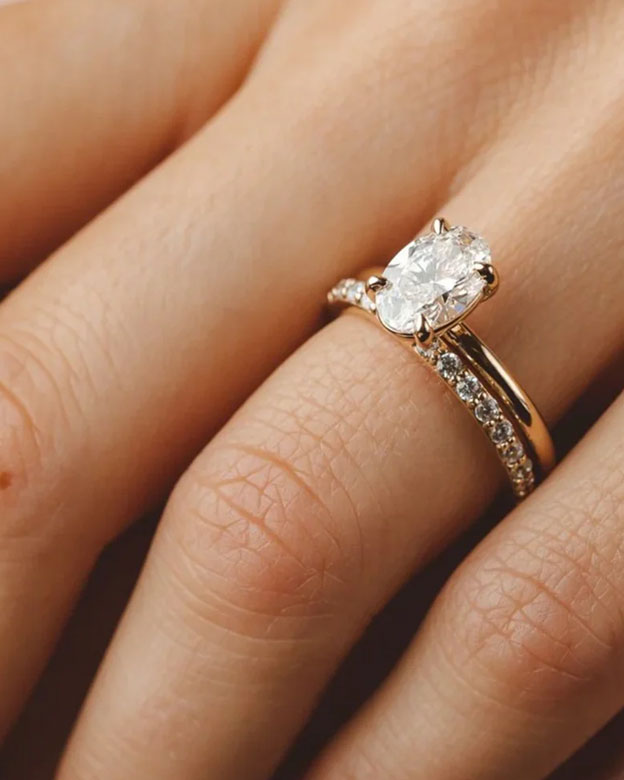
When you’re shopping for an engagement ring, the technical specs are important, but the real-world experience is what truly matters. If you’re feeling torn, it helps to put both options through the engagement ring test to see which aligns with your vision for the big moment.
Can Anyone Tell?
One of the most common worries couples have is whether a lab grown diamond looks different when it’s on the finger. The short answer? Absolutely not.
Because they are optically identical, no one (not your friends, your future mother-in-law, or even a professional jeweller) can tell the difference just by looking at the ring. Without high-tech lab equipment designed specifically to detect growth patterns, it’s impossible to distinguish a lab grown stone from a natural one. When you’re at a dinner party or showing off the ring to family, all they will see is the breathtaking fire and brilliance of a world-class diamond.
Maximising Your Buying Power
For most couples, an engagement ring is a significant investment at a time when you might also be saving for a wedding, a honeymoon, or a first home. This is where the lab grown vs natural diamond debate gets interesting.
Choosing lab grown dramatically increases your buying power:
Framing the choice this way lets you decide: do you want the traditional rarity of a smaller natural stone, or would you prefer to level up to a showstopping, larger diamond that offers maximum wow factor on the hand?
A Choice Between Two Paths to One Forever

When comparing lab grown vs. natural diamonds, it quickly becomes clear that there’s no wrong choice — only the one that tells your story best. Both options offer the same spectacular fire, the same legendary durability, and the same unmistakable sparkle that has made diamonds the ultimate symbol of love.
The only real difference is the journey. One diamond is a geological masterpiece, a billion-year-old survivor of the Earth’s inner depths. The other is a technological triumph, a perfect gemstone born from human ingenuity.
Whether you choose a stone formed by the ancient forces of nature or one created by the cutting-edge science of today, you’re choosing a gemstone that transcends time to represent your love, commitment, and future.
You May Also Like
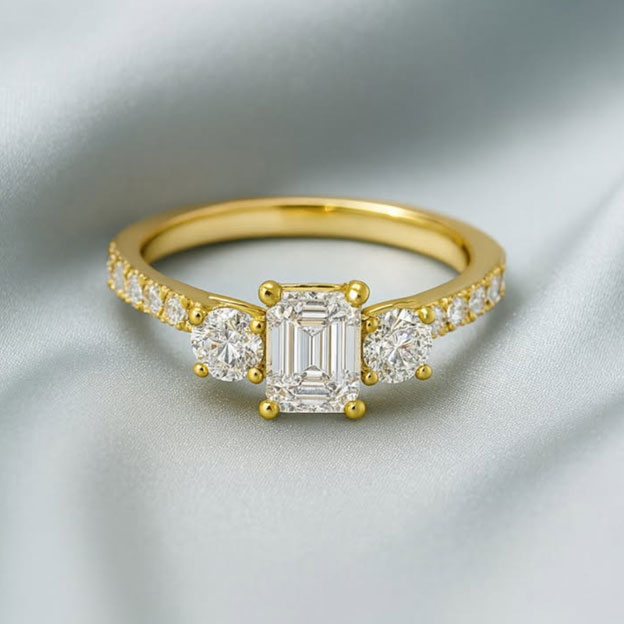
What Actually Matters When Choosing an Engagement ...
Choosing an engagement ring can feel exciting, confusing and very significant all at once. You might be drifting be ...
The Magic of Yellow Gold: Why This Warm Metal Is P ...
When winter comes around, everything shifts a little. The light gets cooler, our wardrobes get heavier, and the col ...

Why Engagement Season Is More Than Just a Trend
Every year, from November to February, proposals start popping up everywhere — Christmas, New Year’s Ev ...
