



Wedding Ring Profiles Explained
Understanding ring profiles
The profile of a ring refers to the shape of the band when viewed from the side or in cross-section. Different profiles influence how the ring looks, how it feels on the finger and how comfortable it is to wear every day.
Below are some of the most popular ring profiles used in wedding rings and jewellery designs.
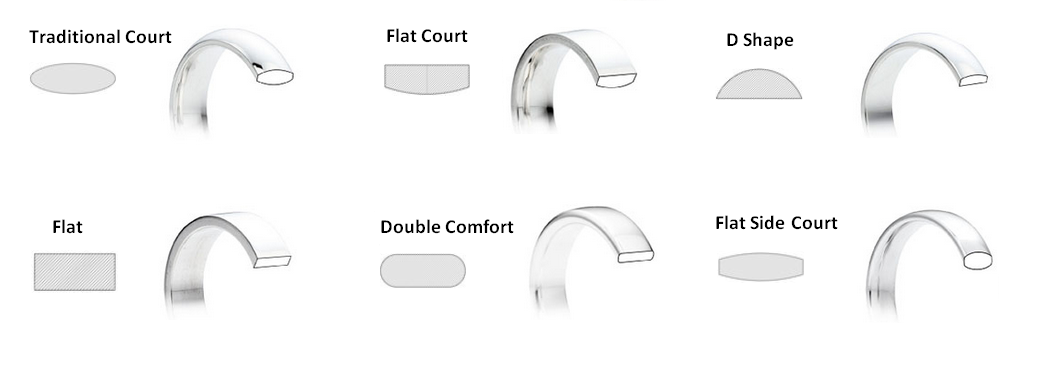
Traditional Court
The traditional court profile is curved on both the inside and outside of the ring.
Often referred to as a comfort fit, this style is one of the most popular choices because the rounded interior makes it particularly comfortable for everyday wear.
Flat Court
Flat court rings feature a flat outer surface with a curved interior.
This design combines the comfort of a traditional court ring with a more modern appearance, making it a popular option for those who prefer a contemporary style.
D Shape
A D shape ring has a flat interior with a rounded outer surface.
This profile allows the ring to sit neatly against the finger and can help reduce the chances of the ring catching on clothing or other objects.
Flat Profile
Flat profile rings have a flat interior and flat exterior, creating a clean and structured appearance.
This profile often results in a slightly wider or more substantial look and is a popular choice, particularly for men’s wedding rings.
Double Comfort
Double comfort rings feature a gentle curve on both the inside and outside, combined with softly rounded edges.
This design enhances comfort and creates a smooth feel between the fingers while maintaining a refined appearance.
Flat Sided Court
The flat sided court profile features a slightly curved interior and exterior, similar to the traditional court style, but with flatter sides.
This design offers the comfort of a curved ring profile while introducing a more contemporary and structured look.
