Diamond Terminology: Understanding Common Diamond Terms
What are melee diamonds?
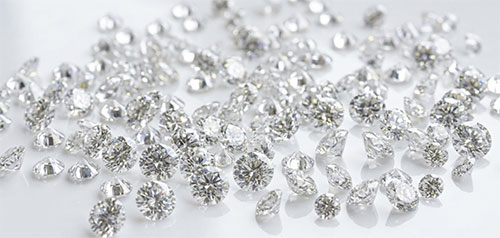
Melee diamonds are small diamonds typically weighing between 0.025 carat and 0.07 carat. These smaller stones are commonly used as accent diamonds in jewellery designs such as halo settings, shoulder stones or pavé styles.
Diamonds that weigh less than 0.02 carat are often referred to as star diamonds.
What is brilliance, dispersion and scintillation?
These terms describe how a diamond interacts with light and are often used when discussing a diamond’s sparkle.
Brilliance refers to the white light that reflects from both the interior and surface of a diamond.
Dispersion, often known as fire, describes the flashes of coloured light that appear when white light is separated into different colours within the diamond.
Scintillation refers to the flashes of light and sparkle that occur when a diamond moves. This effect is created by the contrast between bright and dark areas within the stone.
What is lustre?
Lustre describes how a surface reflects light and how shiny or polished it appears.
In gemmology, lustre refers to the quality and intensity of light reflected from the surface of a gemstone. A material with high lustre appears bright and reflective, similar to the surface of a mirror.
What is a diamond facet?
A facet is a flat polished surface on a gemstone.
Diamonds are cut with multiple facets so they can reflect and refract light effectively. The number and arrangement of facets influence how a diamond interacts with light.
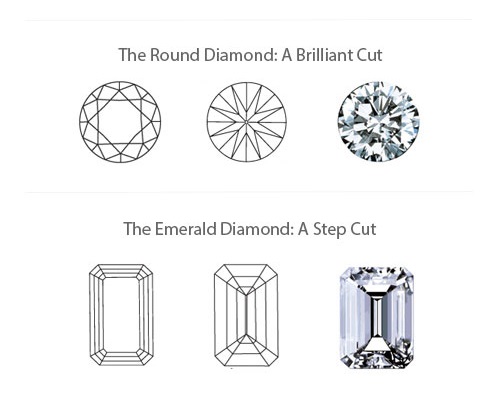
For example, a round brilliant diamond typically contains 58 facets.
What do brilliant cut and step cut mean?
These terms describe different diamond cutting styles.
Brilliant cut diamonds use triangular or kite-shaped facets designed to maximise sparkle. The most well-known example is the round brilliant cut, which usually contains 58 facets.
Step cut diamonds feature long rectangular facets arranged in rows. This cutting style is commonly used for shapes such as emerald and asscher diamonds.
Some diamond shapes combine both faceting styles. These are sometimes referred to as mixed cuts.
Each cutting style produces its own distinctive light performance and visual appearance.
What is a fancy shape diamond?
A fancy shape diamond is any diamond shape that is not round.
Examples of fancy shapes include oval, princess, emerald, cushion, marquise, pear and heart.
The term can also apply to fancy colour diamonds, which are diamonds that display noticeable colour rather than appearing white or colourless.
Why do gemstones of the same size vary in price?
Two gemstones that appear similar in size may still vary significantly in price because of differences in quality.
Gemstone value is typically influenced by several factors, including:
• Colour
• Symmetry
• Lustre
• Transparency
For example, two rubies that both weigh 1 carat may differ greatly in price depending on these characteristics.
What is the Mohs scale?
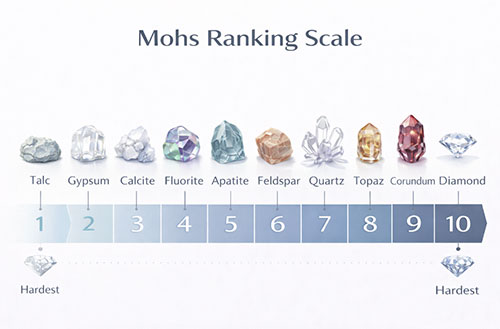
The Mohs scale is used to measure the hardness of minerals and gemstones.
Hardness refers to how well a material resists scratches and abrasion.
It is important to distinguish hardness from toughness. While hardness measures scratch resistance, toughness refers to how well a material resists breaking or chipping.
Diamonds rank at 10 on the Mohs scale, making them the hardest natural material known.
The next hardest gemstones are corundum, which includes rubies and sapphires.
Although diamonds are extremely hard, they are not the toughest material. This means they can still chip or fracture if struck with sufficient force in the right place.